
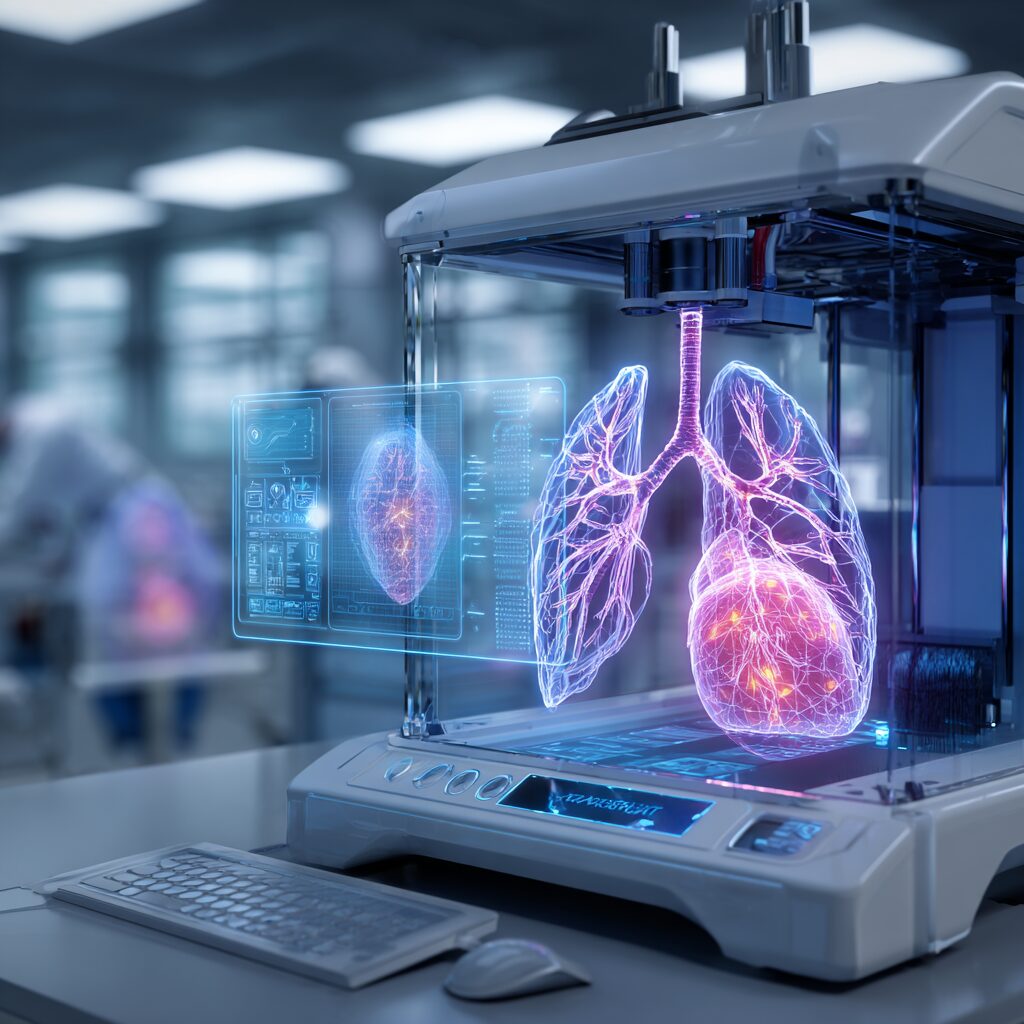
The Future of Manufacturing Is Being Built Now
How AI + 3D Printing Is Creating the Next Trillion-Dollar Opportunity
The next industrial revolution isn’t coming.
It’s already here — and it’s being quietly built at the intersection of artificial intelligence and 3D printing.
While most of the world is focused on software, automation, and digital transformation, a deeper shift is taking place beneath the surface:
👉 The digitization of physical production
And for investors, founders, and forward-thinking entrepreneurs, this may be one of the most important opportunities of the next decade.
🧠 From Physical to Digital Manufacturing
For over a century, manufacturing has followed a predictable model:
- Design products manually
- Build factories
- Produce at scale
- Store inventory
- Ship globally
This model is capital-intensive, slow to adapt, and inefficient.
Now, that model is breaking.
We are moving toward a system where:
- Products are designed by AI
- Stored as digital files
- Produced on demand
- Manufactured locally via 3D printing
Instead of shipping products…
👉 We send data.
⚙️ AI Is Redefining Design Itself
Artificial intelligence is not just improving manufacturing — it is fundamentally changing how products are created.
Through generative design, AI can:
- Explore thousands of design variations instantly
- Optimize for strength, weight, and cost
- Produce structures humans would never conceive
The result?
Products that are:
- More efficient
- More durable
- Less resource-intensive
And critically — these designs are perfectly suited for additive manufacturing.
This is why AI and 3D printing are not separate innovations.
They are a combined system.
🏭 The Rise of Intelligent Production Systems
We are now seeing the early stages of what can only be described as:
👉 Autonomous Manufacturing
A new workflow is emerging:
- AI generates the product design
- AI optimizes print parameters
- 3D printers manufacture the object
- AI monitors quality in real time
- The system continuously improves
This creates a feedback loop where production becomes:
- Faster
- Smarter
- More adaptive
Factories are no longer static environments.
They are becoming intelligent systems.
🌍 A Massive Shift in Global Supply Chains
This transformation has enormous implications.
Instead of relying on centralized factories and global logistics networks, companies can now:
- Produce closer to the customer
- Reduce inventory costs
- Eliminate shipping delays
- Respond instantly to demand
This leads to:
👉 Decentralized manufacturing networks
A world where thousands of small, distributed production hubs replace massive centralized facilities.
💰 Where the Opportunities Are
For those paying attention, the opportunity is not theoretical — it’s already emerging.
🔥 Key Areas of Growth:
1. Digital Product Ecosystems
Selling 3D-printable designs globally
2. On-Demand Manufacturing Services
Local production for businesses and consumers
3. AI-Driven Design Platforms
Automating product creation and optimization
4. Niche Vertical Manufacturing
Medical, aerospace, automotive, and construction
5. Distributed Production Networks
Connecting printers worldwide into unified systems
🚀 The Role of 3D Printing Ventures
At 3D Printing Ventures, the focus is simple:
👉 Identify, support, and scale the companies building this future.
This includes:
- Early-stage startups
- Innovative manufacturing platforms
- AI-driven design solutions
- Infrastructure for decentralized production
The goal is not just to invest in companies — but to participate in building an entirely new industrial ecosystem.
🧪 The Incubator Layer: Where Ideas Become Companies
One of the most important components of this ecosystem is the startup pipeline.
That’s where initiatives like the 3D Printing Incubator come in.
A recent feature on the incubator platform highlights just how transformative this convergence is:
👉 The article “AI + 3D Printing Is Changing Everything” on
https://www.3dprintingincubator.com/ai-3d-printing-is-changing-everything/
breaks down how artificial intelligence is moving beyond software and into the physical world — generating designs, optimizing production, and enabling entirely new manufacturing models.
It reinforces a critical insight:
The future of manufacturing is not just automated — it is intelligent, adaptive, and digital-first.
For founders, this represents a massive opportunity to build companies at the intersection of:
- AI
- Additive manufacturing
- Digital distribution
- Decentralized production
🏗 The Long-Term Vision
Zoom out, and a clear picture emerges.
We are heading toward a world where:
- Products are created digitally
- Manufacturing is local and on demand
- Supply chains are shorter and more resilient
- Innovation cycles are dramatically faster
This is not incremental change.
This is a complete redefinition of how things are made.
⚡ Why Most People Are Still Early
Like every major technological shift, this one is easy to underestimate.
Today, many still view 3D printing as:
- A hobby
- A prototyping tool
- A niche technology
But history shows that transformative technologies often start this way.
The internet began as a research network.
Smartphones were once considered unnecessary.
Cloud computing was initially misunderstood.
Now, AI + 3D printing is following the same trajectory.
🧠 Final Insight
The convergence of AI and 3D printing is doing something unprecedented:
👉 It is turning manufacturing into a software-driven process
And when something becomes software-driven:
- It scales faster
- It becomes more accessible
- It creates entirely new business models
🚀 Final Thought
The next generation of companies won’t just build products.
They will build systems of creation.
And those who understand this shift early will have a significant advantage.
The future of manufacturing is not being built in factories.
It’s being built in code… and printed into reality.
Leave a Reply